instructions for hotpoint washer dryer
- Published
- in United Kingdom
Hotpoint Washer Dryer: A Comprehensive Guide
Navigating Hotpoint washer dryer operation requires understanding error codes‚ troubleshooting common issues‚ and performing essential maintenance for optimal performance and longevity.
Understanding Your Hotpoint Washer Dryer
Hotpoint washer dryers combine washing and drying capabilities into a single appliance‚ offering convenience but requiring specific operational knowledge. Familiarize yourself with the control panel‚ cycle options‚ and load capacity guidelines detailed in your user manual.
These machines often feature various wash programs – delicate‚ intensive‚ quick wash – and dry settings like timed dry or sensor dry. Understanding these options ensures optimal fabric care and energy efficiency.
Be aware of potential issues like overloading‚ which can impact performance‚ or obstructed filters‚ leading to drainage problems. Regularly checking and resetting the machine‚ as needed‚ can prevent malfunctions. A full cycle‚ followed by a dry-only selection‚ can resolve some operational hiccups.
Safety Precautions
Prioritize safety when operating your Hotpoint washer dryer. Always disconnect the appliance from the mains electricity supply before any maintenance or troubleshooting – unplugging is crucial. Never attempt repairs yourself if you are not qualified; seek professional assistance.
Be mindful of the recall announced for certain Hotpoint and Indesit machines due to door lock faults. Ensure your model isn’t affected and heed any safety concerns. Avoid overloading the machine‚ as this can strain components and create instability.
Keep children and pets away from the appliance during operation. Regularly inspect the power cord for damage. If issues arise‚ such as non-selectable functions‚ immediate disconnection from the mains is recommended.
Common Hotpoint Washer Dryer Error Codes
Decoding error messages is vital for diagnosing issues with your Hotpoint washer dryer. These codes signal specific problems‚ guiding troubleshooting efforts. Understanding these signals allows for quicker resolutions‚ potentially avoiding costly repairs.
Common issues can manifest as the machine not starting‚ the drum failing to spin‚ or water not draining correctly. Error codes often pinpoint the source of these problems. Resetting the machine by unplugging it for a period can sometimes resolve minor glitches.
Refer to your appliance’s manual for a comprehensive list of error codes and their meanings. Online resources also provide assistance in interpreting these signals and finding appropriate fixes.
Decoding Error Messages
Hotpoint washer dryer error messages are the appliance’s way of communicating specific faults. These aren’t random; each code corresponds to a defined issue‚ from door lock malfunctions to drainage problems. Identifying the code is the first step towards a solution.
Typically‚ error codes appear on the machine’s display panel. Consult your user manual – it contains a detailed list of codes and their explanations. Online searches using the error code and your model number can also yield helpful results.
Remember that some codes may indicate a simple fix‚ like an overloaded drum‚ while others suggest a more serious mechanical failure requiring professional attention. Accurate decoding saves time and potential expense.
Resetting the Machine
A simple reset can often resolve minor glitches in your Hotpoint washer dryer. This process effectively restarts the appliance’s internal systems‚ clearing temporary errors. The most common method involves a full power cycle.
First‚ ensure the machine is switched off. Then‚ disconnect it from the mains power supply – physically unplug the appliance from the wall socket. Allow it to remain unplugged for a minimum of five minutes. This allows any residual electrical charge to dissipate.
After the waiting period‚ reconnect the power and switch the machine back on. Attempt to run a cycle. If the issue persists‚ a more in-depth troubleshooting approach may be necessary‚ but a reset is a good initial step.
Troubleshooting Common Issues
Encountering problems with your Hotpoint washer dryer can be frustrating‚ but many issues are easily resolved. Common complaints include the machine failing to start‚ the drum not spinning‚ or water failing to drain properly. Before calling a technician‚ attempt basic troubleshooting steps.
Check the power supply and ensure the door is securely closed. For drainage issues‚ inspect the drain hose for kinks or blockages. A noisy machine might indicate an unbalanced load or foreign objects within the drum.
Remember to consult the error codes displayed on the machine‚ as these provide valuable clues to the underlying problem. Often‚ a simple reset or cleaning of the filter can restore functionality.
Washer Dryer Won’t Start
If your Hotpoint washer dryer refuses to start‚ begin with the simplest checks. Confirm the appliance is correctly plugged into a functioning power outlet. Test the outlet with another device to rule out electrical issues; Ensure the door is firmly closed; the machine won’t operate if the door lock isn’t engaged.
Next‚ verify that a cycle has been selected and the ‘Start’ button has been pressed. Some models require you to fully complete a wash or dry cycle before initiating another. A complete power cycle – unplugging the machine for a few minutes – can sometimes resolve minor glitches.
If these steps fail‚ consult the error codes displayed for more specific guidance.
Drum Not Spinning
A non-spinning drum often indicates an overloaded machine. Remove some items and attempt to restart the cycle. Check for obstructions – small items like socks can get lodged between the drum and the outer tub. A broken drive belt is a common culprit; replacing it usually requires disassembly and some mechanical aptitude.
The motor coupling may also be faulty‚ especially if you hear a clicking sound. Inspect the coupling for damage and replace if necessary. Ensure the machine isn’t paused or in a spin-hold cycle. If the issue persists‚ a more serious motor problem might be present‚ requiring professional attention.
Always disconnect the appliance before any internal inspection.
Water Not Draining
Persistent standing water in your Hotpoint washer dryer usually points to a blocked drain pump or drain hose. First‚ check the drain hose for kinks or obstructions. Next‚ locate and carefully clean the drain pump filter – it’s often accessible from a small panel at the front of the machine.
Ensure all coins‚ lint‚ and debris are removed. A clogged pump impeller can also prevent drainage; inspect and clear it if necessary. If the hose and filter are clear‚ the drain pump itself may be faulty and require replacement. Disconnect the appliance from the mains before accessing any internal components.
Consider a professional if you’re uncomfortable with disassembly.
Machine is Noisy During Operation
Excessive noise during a wash or dry cycle often indicates loose objects or mechanical issues. Begin by ensuring the machine is level; adjust the feet as needed. Check the drum for items like coins or bra wires that may be causing rattling. A worn drive belt or motor coupling can create squealing or thumping sounds.
If the noise persists‚ inspect the drum bearings for wear – a grinding sound suggests they need replacing. A faulty pump can also contribute to noise. Always disconnect the appliance from the mains before investigating internal components.
Overloading the machine can also cause increased noise levels; adhere to recommended load capacities.
Door Lock Problems & Recalls
A malfunctioning door lock is a significant safety concern with Hotpoint washer dryers. Recent recalls‚ affecting up to 519‚000 units‚ stem from door lock faults that can lead to the machine opening mid-cycle. This poses a risk of injury or water damage. If your machine exhibits door lock issues‚ immediately discontinue use.
Check for obstructions preventing proper latching. If the problem persists‚ a faulty door lock mechanism may require replacement. Whirlpool has announced recall programs; verify if your model is affected and follow their instructions for repair or replacement.
Prioritize safety and heed recall notices to prevent potential hazards associated with a compromised door lock.
Identifying Door Lock Faults
Recognizing door lock faults is crucial for safe operation. A common sign is the inability to start a cycle‚ often accompanied by an error code. The door may not latch securely‚ or the lock may engage/disengage unexpectedly during operation. Listen for unusual clicking or grinding sounds emanating from the door lock area.
Visually inspect the door lock mechanism for any visible damage or obstructions. Attempt to manually lock and unlock the door – excessive force or resistance indicates a problem. If the machine displays an error related to the door‚ consult the user manual for specific troubleshooting steps.
Caution: Do not attempt to bypass the door lock; this is a safety hazard.
Recall Information & Safety Concerns
Recent reports indicate Whirlpool announced a recall affecting approximately 519‚000 Hotpoint and Indesit washing machines due to a faulty door lock. This defect poses a significant safety risk‚ potentially allowing the door to unlock mid-cycle‚ leading to water leakage or even ejection of laundry.
If you own a recalled model‚ immediately discontinue use. Contact Whirlpool to schedule a free repair. Do not attempt to fix the issue yourself. Check the Whirlpool website or relevant consumer safety organizations for a complete list of affected model numbers and detailed recall instructions.
Prioritize safety: A malfunctioning door lock can create a dangerous situation. Ignoring recall notices could result in property damage or personal injury.
Replacing Common Parts
Addressing appliance malfunctions often involves replacing worn components. Frequently‚ Hotpoint washer dryers require a new drive belt to restore drum rotation‚ a relatively straightforward repair for those comfortable with DIY projects. Another common issue necessitates installing a new motor coupling‚ connecting the motor to the transmission.
Before commencing any repair‚ disconnect the appliance from the mains power supply for safety. Consult online resources‚ repair manuals‚ or video tutorials specific to your Hotpoint model for detailed step-by-step instructions. Ensure you obtain the correct replacement parts compatible with your machine.
Proper installation is crucial for optimal performance and to avoid further damage. If unsure‚ seek assistance from a qualified appliance repair technician.
Replacing the Drive Belt
Restoring drum rotation often requires replacing the drive belt. Begin by disconnecting power to the appliance. Access the belt typically involves removing the rear panel of the washer dryer. Carefully note the belt’s routing around the drum and motor pulley before removal – a photograph can be helpful!
Loosen the tension on the motor to facilitate belt removal. Install the new belt‚ ensuring it’s correctly seated on both the drum and motor pulleys. Re-tension the motor and verify the belt runs smoothly without slipping.
Reassemble the rear panel and test the washer dryer. A snapped or worn belt is a common repair‚ restoring functionality with careful attention to detail.
Installing a New Motor Coupling
Addressing a lack of drum movement frequently involves replacing the motor coupling. Safety first: disconnect power! Access usually requires removing the front or rear panel‚ depending on the model. Locate the coupling – a small‚ often plastic component – connecting the motor to the transmission.
Remove the old coupling‚ noting its orientation. The new coupling typically slides onto the motor shaft and transmission. Ensure a secure fit; some couplings require a slight twist to lock into place.
Reassemble the appliance and test its operation. A faulty motor coupling prevents power transfer‚ and replacement restores drum rotation‚ resolving a common washer dryer issue.
Cleaning and Maintenance
Regular cleaning extends your Hotpoint washer dryer’s lifespan and maintains optimal performance. Begin with the drum: run an empty hot cycle with a washing machine cleaner monthly to eliminate residue and odors.
Crucially‚ clean the filter after every use or several loads. This prevents drainage issues and ensures efficient drying. Locate the filter (usually at the front‚ bottom of the machine) and remove any lint‚ debris‚ or small objects.
Wipe down the door seal to prevent mold and mildew. Periodically inspect and clean the detergent dispenser. Consistent maintenance avoids common problems and keeps your appliance running smoothly.

Cleaning the Drum
Maintaining a fresh drum is vital for your Hotpoint washer dryer. Monthly deep cleaning is recommended. Utilize a washing machine cleaner specifically designed for drum hygiene. Pour the cleaner into the detergent dispenser and run a hot‚ empty cycle.
This process effectively removes built-up detergent residue‚ fabric softener buildup‚ and potential mold or mildew. For a quick refresh‚ wipe down the drum’s interior with a damp cloth after each use.

Avoid harsh chemicals or abrasive cleaners‚ as these can damage the drum’s surface. A clean drum ensures clothes remain fresh and prevents unpleasant odors.
Cleaning the Filter
Regular filter cleaning is crucial for optimal Hotpoint washer dryer performance. Locate the filter – typically at the front‚ bottom of the machine‚ behind a small access panel. After each use‚ or at least monthly‚ carefully remove the filter‚ as some water may spill.
Inspect the filter for lint‚ debris‚ and small objects like coins or buttons. Thoroughly clean the filter under running water‚ removing all obstructions. Ensure the filter is completely dry before reinserting it.
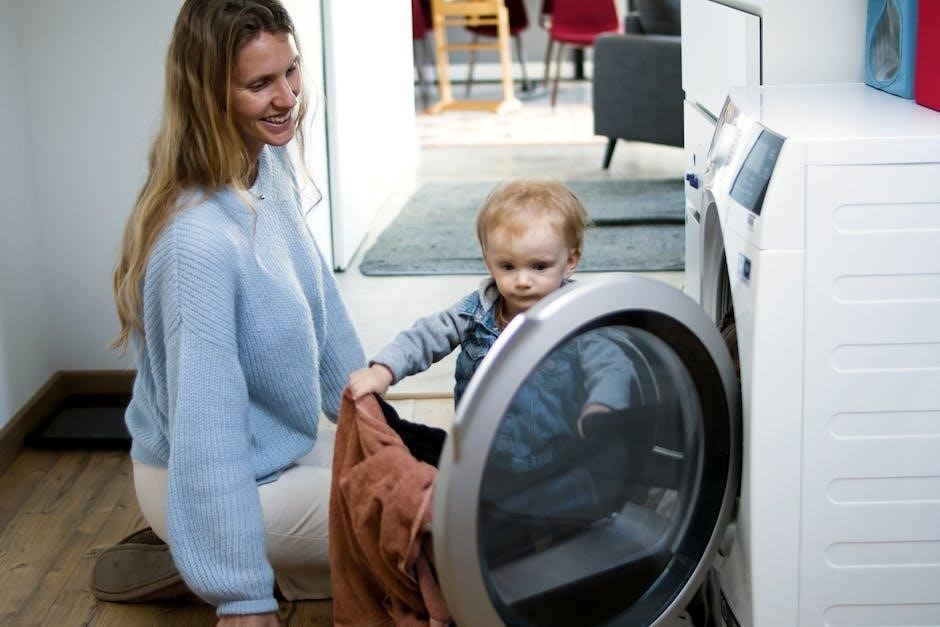
A clogged filter restricts airflow‚ leading to longer drying times and potential overheating. Proper filter maintenance extends the appliance’s lifespan and ensures efficient operation.
Dealing with Overloading Issues
Overloading your Hotpoint washer dryer significantly impacts performance and can cause damage. Always adhere to the manufacturer’s recommended load capacity‚ detailed in your user manual. Avoid cramming too many items into the drum‚ as this prevents proper washing and drying action.
Signs of overloading include extended cycle times‚ reduced cleaning effectiveness‚ and potential error codes. If the machine struggles to spin or drain‚ it’s likely overloaded. Remove some items and restart the cycle.
Consistent overloading can strain the motor‚ belt‚ and other components‚ leading to costly repairs. Distribute the load evenly within the drum to maintain balance and prevent instability during operation.
Dryer Not Heating
A dryer that isn’t heating is a common Hotpoint washer dryer issue. First‚ ensure the appliance is properly connected to a functioning power source. Check the lint filter – a clogged filter restricts airflow and can trigger a safety shut-off‚ preventing heating. Clean the filter thoroughly before each use.
Inspect the vent hose for blockages or kinks‚ as restricted venting also hinders heating. If these simple checks don’t resolve the issue‚ the heating element itself may be faulty and require professional replacement.
Safety is paramount; never attempt to repair electrical components yourself. Disconnect the appliance from the mains before any inspection. A qualified technician can diagnose and fix the heating problem safely and effectively.
Water Supply Problems

Insufficient water supply can halt your Hotpoint washer dryer’s cycle. Begin by verifying the water taps are fully open and the supply hoses aren’t kinked or blocked. Check the water inlet valve screen for sediment buildup; cleaning this filter can restore proper water flow.
Low water pressure in your home can also be a culprit. Test other faucets to confirm adequate pressure. If the problem persists‚ the inlet valve itself might be defective‚ preventing water from entering the machine.
Always disconnect the appliance from the mains before inspecting water connections. If you’re uncomfortable troubleshooting water supply issues‚ consult a qualified plumber or appliance repair technician.
Electrical Issues & Disconnecting from Mains
Electrical faults pose significant safety risks with Hotpoint washer dryers. If you suspect an electrical issue – sparking‚ burning smells‚ or repeated tripping of the circuit breaker – immediately disconnect the appliance from the power supply.
Safety First: Unplugging is crucial. Locate the plug and remove it from the socket. Do not attempt any repairs yourself if you are not qualified. A faulty wiring or internal component requires professional attention.
Before calling for service‚ ensure the socket itself is functioning correctly by testing it with another appliance. Never operate the washer dryer with a damaged power cord or if it’s exposed to water. Contact a certified electrician or appliance repair specialist.
Safety First: Unplugging the Appliance
Prioritizing safety is paramount when dealing with any appliance malfunction‚ especially with a Hotpoint washer dryer. Before undertaking any troubleshooting or maintenance‚ always disconnect the appliance from the mains electricity supply. This prevents electric shock and potential damage to the machine.

Locate the power cord and firmly grasp the plug. Do not pull on the cord itself. Pull directly on the plug to remove it from the socket. Ensure the plug is fully removed and not loosely connected.
This simple step safeguards you during inspection‚ part replacement‚ or cleaning. Remember‚ even seemingly minor issues can involve electrical components. Unplugging is the first and most important action to take.
Finding Professional Help
When self-troubleshooting proves insufficient‚ or if you’re uncomfortable tackling repairs yourself‚ seeking professional assistance is crucial. Hotpoint offers a dedicated customer support network and authorized service centers. Their website provides resources for locating qualified technicians in your area.
Consider the nature of the issue. Complex problems‚ particularly those involving electrical components or the door lock mechanism (given recent recalls)‚ require expert attention. Attempting such repairs without proper training can be dangerous and void your warranty.
Always request a qualified and certified technician. Verify their credentials and ensure they are familiar with Hotpoint washer dryer models. A professional diagnosis guarantees accurate repairs and restores your appliance to safe‚ optimal working order.